
Application
- Automotive Industry – Spark plugs, filters, carburetor parts, brake components.
- Electronics – Delicate housings, casings, connectors, and precision parts.
- Manufacturing & Engineering – Deburring of small castings, forgings, and fabricated parts.
- Aerospace & Defense – Surface finishing of lightweight alloys and precision components.
- Glass & Art – Glass etching, decorative blasting, satin finishes on ceramics or plastics.
- Restoration Projects – Antique parts, jewelry cleaning, restoration of delicate components.
Suction Blasting Cabinet
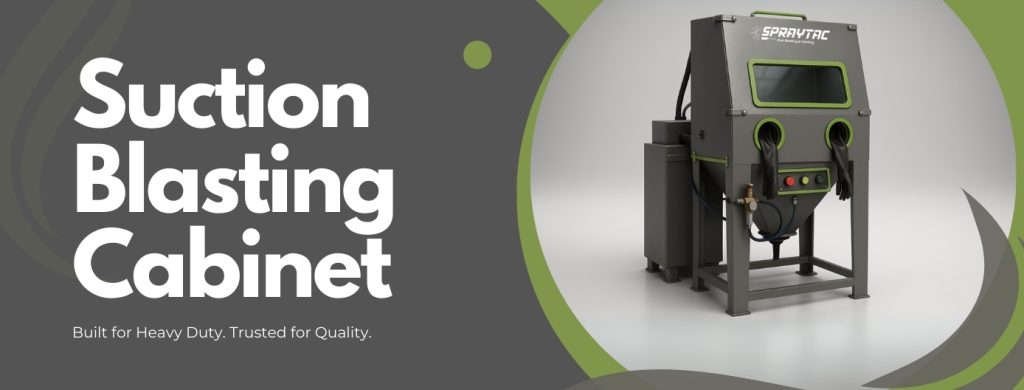
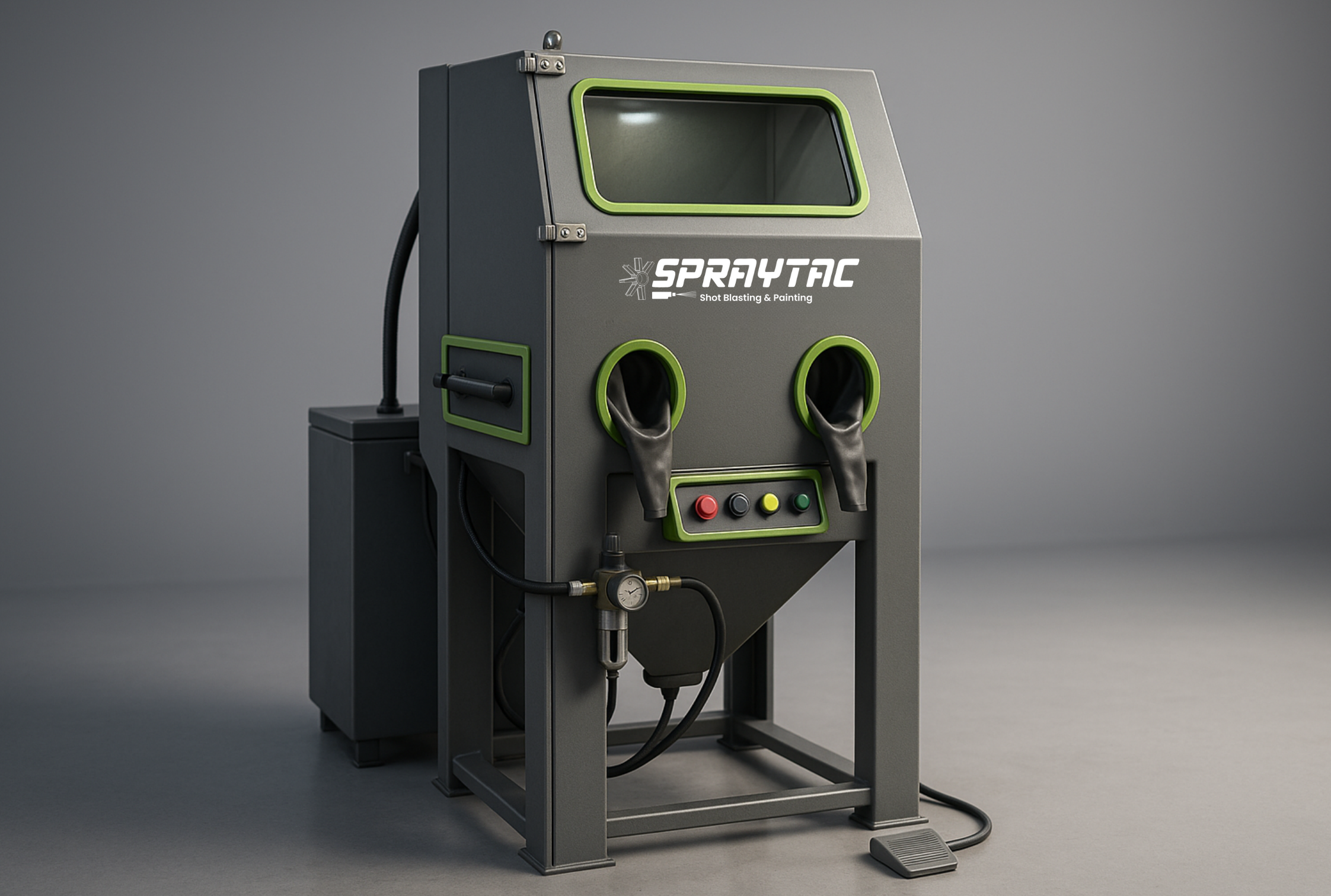
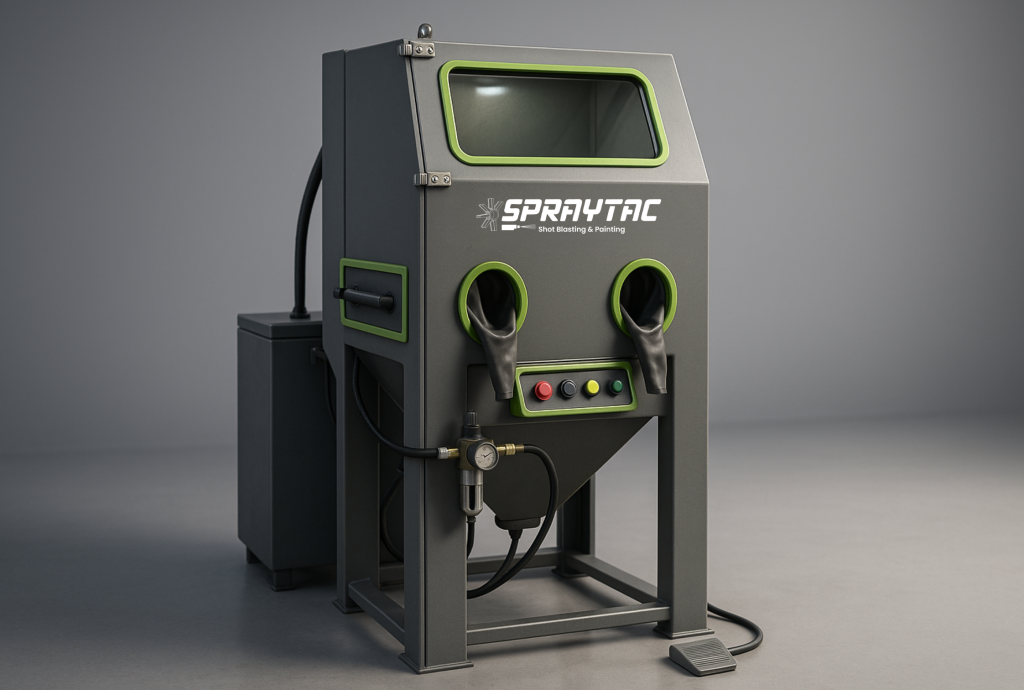
The Suction Blasting Cabinet—also known as a Venturi Blasting Cabinet—is an economical and widely used abrasive blasting system that operates on the Suction Feed Principle. In this system, compressed air passes through a nozzle, creating a suction (Venturi effect) that draws abrasive media into the airflow. The abrasive then mixes with compressed air and is projected onto the surface at high velocity.
This technology requires Lower Compressed Air Consumption compared to pressure blasting, making it ideal for Light to Medium-Duty Cleaning, Finishing & Surface Preparation tasks. Though slower than pressure blasting, suction systems are favored for their Simplicity, Cost-Effectiveness & Ease Of Operation.
Standard / Customization
- Cabinet Sizes: 600 mm × 600 mm to 1,500 mm × 1,500 mm.
- Blast Nozzles: Tungsten carbide or boron carbide (long wear life).
- Dust Collection Options: Bag filter, cartridge, or pulse-jet type dust collectors.
- Lighting: Dust-proof LED lighting for clear visibility.
- Operation Modes: Foot-pedal controlled or hand-trigger nozzles.
- Customization: Turntables, rotary fixtures, multiple nozzles, or semi-automatic handling systems.
Features:
- Economical and energy-efficient blasting system.
- Compact design, requiring minimal floor space.
- Low compressed air consumption compared to pressure systems.
- Fully enclosed cabinet for Dust-Free Operation.
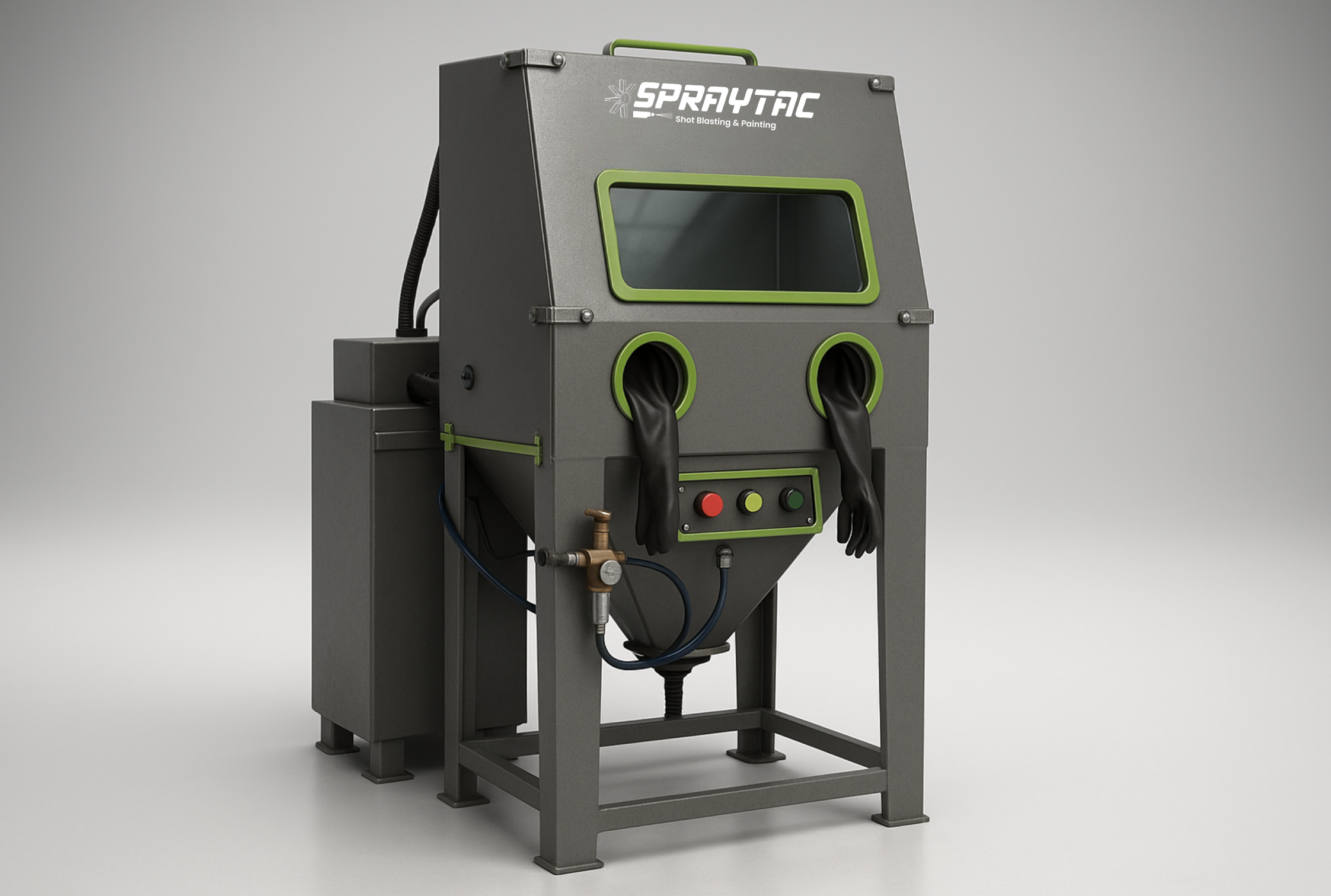
- Ergonomic design with gloves and viewing window for operator comfort.
- Available with optional rotary tables and multi-gun setups.
- Easy to maintain with simple controls.
- Compatible with a wide range of abrasive media (glass beads, garnet, aluminum oxide).
Working Principle
- Compressed air passes through the blast gun nozzle, creating a suction force.
- Abrasive media is drawn from the hopper into the airflow.
- The mixture of air and abrasive is accelerated onto the surface of the component.
- The cabinet collects spent abrasives, which are filtered and partially recycled.
- Dust and fine particles are removed by the Dust Extraction System, keeping the environment clean.
Get in touch